
Vehicle Lockouts Explained: Causes, Prevention, and What Drivers Should Know
Vehicle Lockouts Explained: Causes, Prevention, and What Drivers Should Know
A vehicle lockout can happen unexpectedly and disrupt an otherwise normal day. A driver may accidentally leave keys inside a vehicle, lose access to a key fob, or discover that a vehicle security system is not responding correctly.
Modern vehicles have become more advanced, but these improvements also mean that vehicle access systems are more complex than traditional keys and locks.
Understanding why vehicle lockouts happen, how modern systems work, and what steps drivers can take can help reduce stress when access problems occur.
What Is a Vehicle Lockout?
A vehicle lockout occurs when a driver cannot access or operate their vehicle because they do not have a working method of entry.
Common situations include:
- Keys locked inside the vehicle
- Lost vehicle keys
- Damaged keys
- Faulty key fobs
- Dead remote batteries
- Problems with electronic access systems
- Mechanical lock issues
The solution depends on the type of vehicle, the security technology installed, and the specific cause of the problem.
Common Causes of Vehicle Lockouts
Vehicle lockouts can happen for many different reasons.
Understanding common causes can help drivers prevent similar situations in the future.
Keys Locked Inside the Vehicle
One of the most common vehicle lockout situations occurs when keys are accidentally left inside a vehicle.
This may happen when:
- Drivers place keys on a seat or dashboard
- Doors are closed before checking key location
- Automatic locking features activate
- Multiple people share vehicle access
Modern vehicles may behave differently depending on their locking system and safety features.
Lost Vehicle Keys
Lost keys create both an access issue and a security consideration.
Drivers may lose keys through:
- Misplacing them at home
- Dropping them while travelling
- Leaving them in public locations
- Losing a key ring containing identification
The appropriate response depends on whether the missing key can still be found and whether there is concern about unauthorised access.
Damaged Car Keys
Vehicle keys experience regular use and can become damaged over time.
Common problems include:
- Broken key blades
- Damaged buttons
- Worn key components
- Cracked key housings
- Internal electronic faults
A damaged key may work intermittently before failing completely.
Key Fob Problems
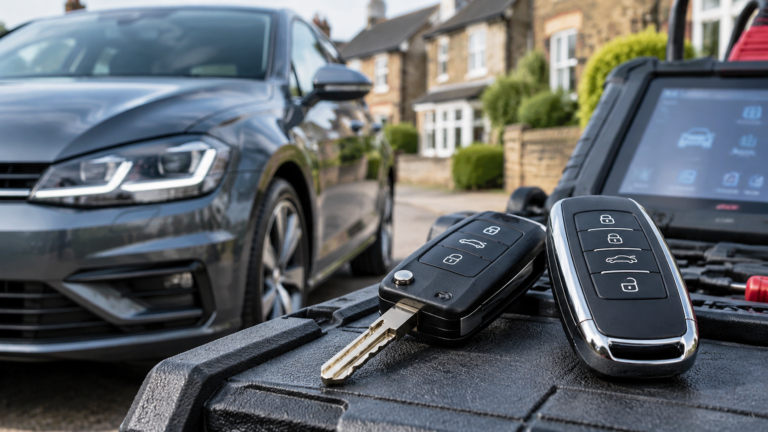
Many modern vehicles rely on remote key fobs.
A malfunctioning key fob may result from:
- Weak battery power
- Physical damage
- Electronic faults
- Communication issues between the key and vehicle
A key fob problem does not always mean the entire vehicle security system has failed.
Dead Key Fob Batteries
A weak or dead battery is a common reason a remote key may stop responding.
Drivers may notice:
- Reduced remote range
- Delayed response
- Buttons working inconsistently
- Complete loss of remote function
Understanding basic key maintenance can help prevent avoidable access issues.
Modern Vehicle Access Systems
Vehicle security technology has changed significantly.
Many modern vehicles use systems such as:
- Remote key entry
- Transponder keys
- Push-button start systems
- Smart keys
- Electronic immobilisers
These systems provide convenience but require specialised knowledge when problems occur.
Understanding Keyless Entry Systems
Keyless entry allows vehicles to recognise an authorised key without traditional manual unlocking.
Depending on the vehicle, this may involve:
- Proximity detection
- Electronic authentication
- Wireless communication
- Push-button ignition
Because these systems rely on technology, access problems may require a different approach compared with older mechanical keys.
What To Do During a Vehicle Lockout
A vehicle lockout can be frustrating, but taking careful steps can help avoid making the situation worse.
Stay Calm and Assess the Situation
First, determine what happened.
Consider:
- Is the key inside the vehicle?
- Is there a spare key available?
- Is the key damaged?
- Is the remote working?
- Is the vehicle in a safe location?
Understanding the problem helps determine the next step.
Check Available Access Options
Depending on the vehicle and situation, drivers may have options such as:
- Spare keys
- Manufacturer-supported assistance
- Existing digital vehicle access features
Drivers should only use authorised methods of accessing their own vehicles.
Avoid Causing Vehicle Damage
Some people attempt to force entry during a lockout.
This can create additional problems, including:
- Damaged weather seals
- Scratched paint
- Broken components
- Increased repair costs
Vehicle security systems are designed differently across manufacturers, so attempting unapproved entry methods may create unnecessary damage.
Contacting an Automotive Locksmith
When professional assistance is needed, drivers should provide useful information.
Important details may include:
- Vehicle make
- Vehicle model
- Approximate year
- Type of key system
- Location of the vehicle
- Description of the issue
This information helps professionals understand the situation before arriving.
Vehicle Verification and Security
Because automotive locksmith services involve vehicle access, responsible professionals may verify ownership or authorisation.
This helps protect vehicle owners and prevent unauthorised access.
Drivers should be prepared to provide appropriate information confirming their connection to the vehicle.
Preventing Vehicle Lockouts
While some situations cannot be predicted, several habits may reduce the likelihood of a lockout.
Keep Spare Keys Secure
A spare key can provide a useful backup option.
However, spare keys should be stored responsibly.
Consider:
- Secure storage locations
- Who has access
- Updating spare keys when circumstances change
Develop a Key Routine
Simple habits can reduce forgotten-key situations.
Examples include:
- Checking keys before leaving the vehicle
- Keeping keys in a consistent location
- Avoiding placing keys in unusual areas
Maintain Key Fobs
Drivers can help maintain key reliability by:
- Replacing batteries when needed
- Protecting key fobs from damage
- Avoiding unnecessary impact or moisture exposure
Be Aware of Vehicle Security Technology
Understanding how your vehicle works can help prevent confusion during access problems.
Drivers should know:
- Whether the vehicle uses a physical key or smart key
- How emergency access works
- Where replacement information is available
Common Vehicle Lockout Misconceptions
Myth: All Vehicles Use the Same Key System
Different manufacturers use different security technologies.
A key solution for one vehicle may not apply to another.
Myth: A Lockout Always Means the Key Is Lost
A lockout may happen because of:
- A key inside the vehicle
- Battery failure
- Electronic communication problems
- Mechanical issues
Myth: Modern Vehicles Cannot Have Access Problems
Advanced security systems improve protection, but they can still experience failures or user-related issues.
Vehicle Lockouts and UK Drivers
Drivers across the UK operate vehicles with many different security systems.
Factors affecting vehicle access include:
- Manufacturer
- Vehicle age
- Key technology
- Security features
- Maintenance history
Understanding general automotive locksmith concepts can help drivers communicate more effectively when seeking assistance.
Preparing for Future Access Problems
A little preparation can make unexpected situations easier to handle.
Drivers may consider:
- Keeping important vehicle information available
- Knowing spare-key options
- Maintaining key batteries
- Reviewing manufacturer guidance
- Understanding vehicle security features
Final Thoughts
Vehicle lockouts are common situations that can affect drivers regardless of vehicle type or experience.
Understanding the causes of lockouts, maintaining vehicle keys properly, and knowing how modern access systems work can help reduce stress when problems occur.
Modern automotive locksmith services address a wide range of vehicle access challenges, from traditional keys to advanced electronic systems.
Being informed is one of the best ways drivers can prepare for unexpected situations.
Disclaimer
This article is provided for general educational purposes only. Vehicle security systems vary by manufacturer, model, and year. It does not replace professional automotive locksmith assessment or vehicle-specific technical advice.